
Trade/Investment
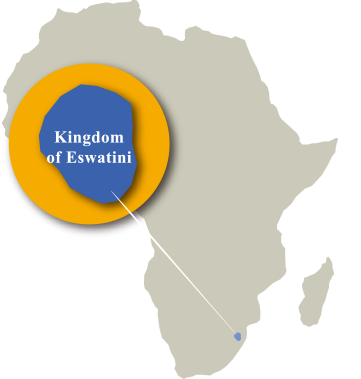
Eswatini
Enviroment
The Kingdom of Eswatini is officially open for business.
Writer: Phoebe Harper | Project Manager: Krisha Canlas
A competitive investment destination for Southern Africa and an effective gateway to the rest of the continent, this landlocked country boasts a highly developed infrastructure with a stable network of road and rail, and healthy trade agreements including the Southern African Development Community (SADC), African Continental Free Trade Area (AfCFTA) and the African Growth and Opportunity Act (AGOA).
In addition to this enabling framework, the Kingdom is blessed with a highly educated labour force and a reliable supply of electricity and raw materials, needed as the basic support to keep businesses going. In terms of finance, the Common Monetary Area (CMA) is instrumental in maintaining a favourable rate between the Swati Lilangeni and the South African Rand.
Alongside Botswana, Lesotho, Namibia, and South Africa, the Kingdom forms part of the Southern African Customs Union, allowing the free movement of goods and services throughout the area. As a result, the country’s primary trading partner is South Africa.
Nevertheless, Eswatini is dedicated to diversifying its network of trade, seeking greater opportunities across Europe and the UK in particular.
As an export-oriented economy, over the past few decades, economic growth in Eswatini has been championed by foreign direct investment (FDI) in mining, agribusiness, tourism and manufacturing.
With agriculture a mainstay of the national economy, Eswatini also seeks to become more competitive in value-added manufacturing and processing by offering incentive packages to investors. This represents one of the greatest FDI opportunities, alongside agribusiness, energy, mining, and tourism/hospitality.
Today, recovery is on the agenda, as Eswatini seeks to reinforce its economy after weathering the brunt of the COVID-19 pandemic. In order to re-establish a conducive and enabling environment for business, there arises the need for a branch of communication between local enterprises – whether large corporations or SMEs - and the national players that have a major impact on this, including the insurance industry, logistics services, and regulators.
A close working relationship with the national government is also essential to implement legal policies and investment strategies, including the Post-COVID-19 Economic Recovery Plan.
Despite a challenging investment climate due to limited funding, the country perseveres in its promotion of Eswatini as a hotbed for trade and opportunities for investors, forging a hopeful future as Africa’s new promise.
Industries
Information and Communications Technology
ICT is an emerging sector supported by the country’s transition to being an efficiency-driven economy. Eswatini has embarked on a number of initiatives to spur the growth of this key sector such as e-government and the construction of the Royal Science and Technology Park. The country boasts of a fixed network that is 100% digital and supported by a countrywide optical fibre network and increased skills pool for the sector through the introduction of IT courses in tertiary institutions.
Mining
Over the years, the Kingdom of Eswatini has identified rich deposits of a number of precious stones and gems. The country has two operational mines which extract Gold in the North West of the country and Coal in the South East. Eswatini has over 760 million tonnes of unexplored minerals in different parts of the country
Agribusiness
Agriculture has traditionally been the backbone of Eswatini’s economy, contributing 8% to the country’s GDP in 2017. The sector also provides raw materials to the manufacturing sector through the processing of agricultural products such as timber, fruits, and sugar cane. The sector is a major source of employment for over 70% of the rural population. The country has diverse agricultural activities that include sugar cane, citrus fruit, cotton, maize, and other cereal production, as well as forestry, livestock, and other undertakings which generate foreign exchange earnings. Agriculture is successful because of the four climatic regions with fertile soils and rainfall averaging 130mm in summer and 10mm in winter and the availability of major dams for irrigation purposes.
Manufacturing
Manufacturing is one of the major sectors in the economy, contributing about 40% to the GDP, and is the second largest employer after the Agriculture sector. Main products include food and beverages, textiles, zippers and apparel, timber, engineering and metal products, plastics, and chemicals as well as refrigerators.
Energy
Eswatini has 70% national coverage of electricity. Installed capacity for power generation is about 70 MW. Domestic energy sources are mainly hydropower and diesel power plants. The supply shortfall currently stands at 70–80% of the 230MW aggregate demand. The kingdom offers opportunities for the generation of sustainable power that can increase the base load generated locally and the potential for export to the Southern African power pool.
►https://investeswatini.org.sz/priority-sectors-for-investment/
Opportunities
Information and Communications Technology
- Telemedicine, education and socio-economic development
- Accessible and affordable internet infrastructure
- Broadcasting service and local content development
- E-commerce and online services
- Strategic partnerships: Network modernization, financial online services
Mining
- Exploration, mining, up to the marketing of mineral products (coal, gold, diamond and quarry etc.)
- Beneficiation and value addition
Agribusiness
- Increased local production of targeted products such as dairy, fruits, vegetables, meat and other agricultural produce
- Value added of agricultural produce (e.g. tomatoes, peppers, sweet corn, citrus, meat etc.)
- To establish within the agribusiness special economic zone at the King Mswati III International Airport
- Agricultural products marketing services
Manufacturing
- Local manufacturing of essential medicines
- Anti-snake venom manufacturing
- Integrated waste management (green, non-burn technologies)
- High-end fashion textile manufacturing
- Wood processing
- Downstream value added sugar products
Energy
The government actively seeks investments by independent power producers who would invest in local generation by requesting solicited bids on biomass (40MW), solar (40MW), and hydropower generation.
►https://investeswatini.org.sz/priority-sectors-for-investment/
Incentive
The Government of Eswatini encourages foreign and local investment in all business sectors and offers the following incentives to lessen the cost of doing business
Tax Incentives
Reduced Corporate Tax of 10% for 10 years to both local and foreign investments in manufacturing, mining, international services, and tourism. A company eligible for this concession may also be provided with an exemption from withholding taxes on dividends during the same 10-year tax period.
Accelerated Capital Allowances are as follows
Hotel construction and improvement allowance: 50% of the cost is deductible in the year in which it is incurred on the construction of a new hotel or beneficial improvements to an existing hotel. In addition, an annual allowance of 4% of such expenditure is allowed.
Buildings (and improvements thereto) used to house manufacturing plant and machinery: 40% initial allowance in the first year of use and an additional 4% allowance.
Employee housing allowance
20% in the first year and 10% per annum for the next 8 years.
Farming
Certain capital expenditure is tax-deductible, but the total deduction in any year of assessment is limited to 30% of the gross income derived by the farmer from farming operations. Any amount disallowed is carried forward and added to expenditure in the succeeding year.
Unlimited Provision for Losses - losses may be carried forward indefinitely
- Duty-free Access on Capital Goods imported as intermediate goods (to be used as inputs for final products).
- Duty-Free Accession Raw Materials are used for the production of goods exported outside the Southern Africa Customs Union (SACU).
- Full Repatriation of Profits and dividends in any currency without permission and without limitation after payment of income taxes. Repatriation is also allowed for capital repayments and salaries of --expatriates after payment of income taxes.
- Employee Training Allowance of 100% of the cost to be offset against tax liabilities.
- Double Taxation Agreements offering relief for taxes paid abroad on income are also subject to Swazi taxation.
Non-Tax Incentives
- Export Credit Guarantee Scheme through which the Central Bank of Eswatini provides an Export Loan Guarantee scheme and a Small Scale Loan Guarantee scheme which grants guarantees to loans provided by commercial banks.
- Legal Protection of Investments from undue expropriation under the Eswatini Investment Promotion Act of 1998 and the Constitution of Eswatini. In addition, Eswatini is a member of the Multilateral Investment Guarantee Agency (MIGA) of the World Bank which provides added legal protection for foreign investments of member countries from expropriation.
- Five Year Work and Residence Permits for expatriate Directors, Senior Management, and key technical personnel of new enterprises.
- Subsidized Rental on Government Factory Shells at rates dependent upon their location.
Special Economic Zones (SEZ) Incentives
Eswatini has joined other COMESA member states to legislate Special Economic Zones Act to bolster economic development and job creation. Primarily, companies located in the areas designated as SEZs benefit from the following:
Exemption from corporate tax for the first 20 years thereafter a corporate tax shall be charged at a rate of 5% Reductions of customs duty, value added tax, and any other tax payable on raw materials, equipment, and machinery; and Exemption from foreign exchange control or restrictions for activities carried out in an SEZ.